
Simplify Access Policy Documentation for Growing Teams
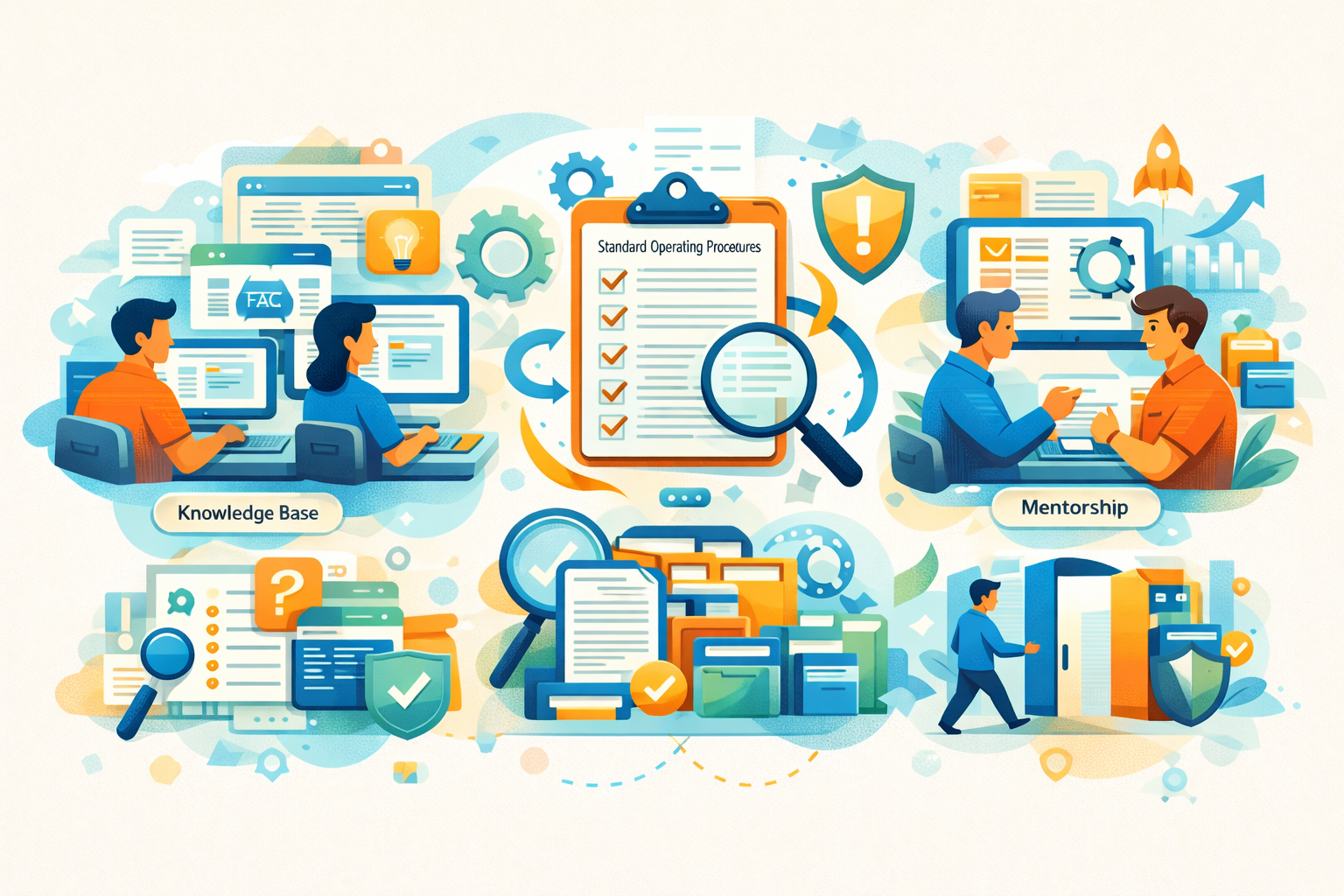
Approaches to Streamline Access Policy Documentation
- Centralized Manual Documentation: This traditional method involves dedicated personnel meticulously drafting and updating access policies in a central repository. Offers granular control and human oversight for specific organizational needs.
- Automated Policy Generation: Leveraging specialized tools, this approach automatically creates and updates access policies based on predefined rules and system configurations. Reduces human error and accelerates the policy lifecycle.
- Hybrid Documentation Model: Combines manual and automated methods. Uses automation for routine policy creation, while human experts focus on complex or exception-based policy definitions and reviews.
Key Evaluation Criteria
- Scalability: How effectively can the method adapt to increasing users, resources, and policy complexities without compromising performance or clarity?
- Accuracy & Consistency: The degree to which policies are free from errors, ambiguities, and contradictions across various systems and documentation versions.
- Ease of Maintenance: How straightforward and time-efficient it is to update, review, and manage policies as organizational structures or security landscapes evolve?
- Auditability: The capability to easily demonstrate compliance, track policy changes, and provide clear evidence for internal and external security audits.
Comparative Analysis of Documentation Approaches
Centralized manual documentation offers high precision for smaller teams, but its scalability quickly diminishes with organizational growth. Managing numerous policies manually becomes highly prone to human error, leading to inconsistencies across different systems. Ensuring accuracy requires constant, diligent effort, which can become a significant bottleneck.
Maintaining manual documentation is often labor-intensive. Policy updates require direct human intervention across all relevant documents, increasing the risk of outdated information. While basic audit trails can be established through version control, compiling comprehensive evidence for audits can be a time-consuming process, relying heavily on meticulous record-keeping.
Automated policy generation excels in scalability, handling large volumes of users and resources with ease. Policies are derived directly from system configurations, ensuring inherent consistency and significantly reducing human-induced errors. This method provides a reliable foundation for complex access control, adapting rapidly to changes in the IT environment.
Maintenance with automation is highly streamlined; changes in system configurations or user roles often propagate automatically to policy documentation. Auditability is significantly enhanced, as specialized tools can generate detailed reports and logs, showing access permissions, changes, and reasons, providing clear evidence for compliance checks with minimal effort.
The hybrid model balances automation for routine tasks with manual oversight for critical areas. This approach offers robust scalability by offloading repetitive policy creation, while human review ensures accuracy for complex scenarios. Maintenance is optimized, and auditability benefits from both structured automated reporting and human-curated documentation for exceptions, offering a comprehensive view.
Recommendations for Implementation
For smaller, less dynamic teams with stable access requirements, the centralized manual approach can be effective. It provides maximum control and flexibility for highly specific needs. However, be prepared for increased administrative overhead as the team expands. DirectiveDesk offers tools to streamline manual documentation processes.
Organizations experiencing rapid growth or operating in highly dynamic environments should strongly consider automated policy generation. This method minimizes manual effort, enhances consistency, and ensures policies keep pace with change. DirectiveDesk solutions are designed to support this agility while adhering to strict security protocols.
For environments with a mix of standard and highly sensitive access policies, or those under strict regulatory compliance, the hybrid documentation model is often the optimal choice. It leverages automation for efficiency while retaining human expertise for critical review and nuanced policy development. DirectiveDesk helps integrate these models seamlessly.